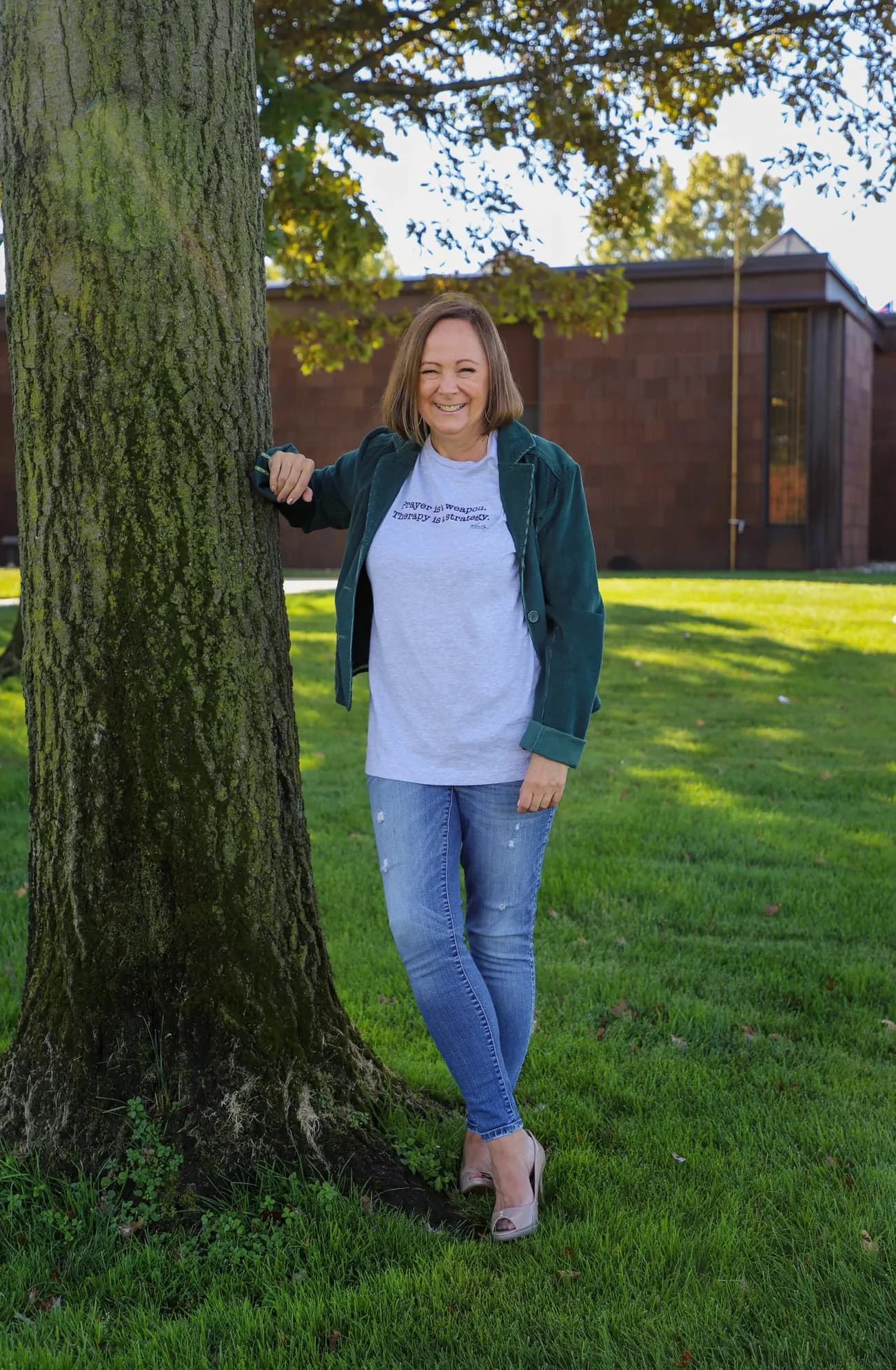
Christian Counselor in Palm City, Florida: Clinically Grounded Care, With Faith Welcome
If your faith matters to you, you may want a counselor who won’t look past it. As a Christian counselor in Palm City, I offer therapy where your beliefs are welcome in the room. If you’d like, we can integrate prayer and Scripture into our work together. If you’d rather not, that’s completely fine. Faith integration is always your choice, never a requirement, and it never takes the place of sound clinical care.
I identify as a Christian, and I’m also a licensed mental health counselor and EMDR Certified Therapist. That means the foundation of our work is evidence-based: EMDR therapy, CBT, trauma-informed care and emotional-regulation skills. For women who want it, faith becomes another resource for comfort, meaning and hope. Clients of any faith, or none, are welcome, and you’ll never be pressured to believe, pray or share anything you don’t want to. Your story is welcome here.
“Your faith is welcome here. So are your doubts, your questions and your whole story.”
April Forella
Sound like you?
You might be looking for a Christian counselor if…
You don’t need to be in a crisis to reach out. If a few of these feel familiar, it’s worth a conversation.
You want a therapist who understands why your faith matters, without having to explain it.
You’re anxious and exhausted, and you feel guilty that prayer alone hasn’t made it go away.
You carry shame that says you should be further along, more grateful or more at peace.
A loss has left you grieving and wrestling with questions about God at the same time.
Someone in a church or faith community hurt you, and how you feel about it now is complicated.
Perfectionism has crept into your spiritual life, and grace feels like something meant for everyone else.
Past trauma still affects your body and relationships, even though you’ve tried to forgive and move on.
You’d like to talk openly about prayer and Scripture in therapy, but only on your terms.
How April works
How faith and clinical care fit together
Our work is grounded in evidence-based therapy, and faith is integrated only to the degree you want. Some women like to open or close a session with prayer, reflect on a verse that brings comfort, or explore how their beliefs shape their healing. Others simply want to know their faith won’t be dismissed. Either way, you lead.
01
Your choice, every time
Early on, we’ll talk about whether and how you’d like faith included. You can change your mind at any point, and nothing about your care depends on what you believe.
02
Clinically grounded
EMDR, CBT, trauma-informed therapy and nervous-system skills form the core of our work. Faith is woven in as a resource, never as a substitute for addressing anxiety, trauma or grief directly.
03
Room for hard questions
Doubt, anger at God and confusion after being hurt are all welcome. You don’t need to have your faith neatly sorted out to be here, and I won’t hand you easy answers.
04
Respect for every background
I don’t assume anything about your tradition or denomination. Whatever your background, or if you have no faith at all, therapy is shaped around your values, not mine.
Christian Therapy in Stuart and Palm City: What It Is, and What It Isn’t
Christian counseling with me is therapy first. Sessions look much like any other therapy: we talk about what’s hurting, build skills to help you feel steadier, and use approaches like EMDR and CBT to work with anxiety, trauma, grief and the patterns that keep you stuck. The difference is that, if you want it, your faith is part of the conversation. We might pray together, reflect on a passage of Scripture that brings you comfort, or look at how your beliefs about God connect to how you see yourself.
Here’s what it isn’t. It isn’t preaching, and it isn’t a place where your struggles are treated as a lack of faith. Anxiety, depression and trauma affect people of deep faith too, and needing help is not a spiritual failure. It also isn’t only for Christians. Women looking for Christian therapy in Stuart and Palm City may be devout, quietly questioning, or simply relieved to find a therapist who shares their values. All of that is welcome.
A Christian EMDR Therapist for Trauma, Anxiety and Shame
As a Christian EMDR therapist, I often meet women who have prayed, read and forgiven, and still feel the same knot in their stomach when something reminds them of the past. That isn’t a failure of faith. Painful experiences can stay stored in the nervous system, so your body keeps reacting even when your mind knows you’re safe. EMDR therapy helps process those experiences so they carry less emotional charge, and the beliefs attached to them, like “I’m unworthy” or “It was my fault,” can begin to shift.
EMDR follows a structured, eight-phase process. We start by building resources so you feel grounded, and for some women those resources include a favorite verse, a short prayer or a sense of God’s presence. Then we use bilateral stimulation, such as eye movements or alternating taps, to process specific memories and triggers. You stay present and in control, can pause anytime, and don’t have to share every detail. Learn more on my EMDR therapy page.
Grief, Faith and the Questions That Follow Loss
Grief can shake even a steady faith. You may believe your loved one is at peace and still feel crushed, angry or numb. You may wonder why God allowed it, or feel guilty for having questions at all. In therapy, there’s room for all of it. We can hold your hope and your heartbreak at the same time, without rushing toward a tidy resolution. I’ve written personally about how faith has anchored me in my own grief in When Grief Doesn’t Make Sense.
Some women also carry hurt connected to faith itself: harsh messages about worth, perfection or obedience, or pain caused by people in a church community. That kind of hurt can be especially confusing because it touches something sacred. We can work through it gently and at your pace, with care for both your healing and your relationship with God, whatever that looks like for you now. My grief counseling page shares more about how I work with loss.
Weekly Christian Counseling or an EMDR Intensive
Most women start with weekly 60-minute sessions, which offer steady support and time to integrate faith and clinical work at a comfortable pace. Weekly therapy is especially helpful in the middle of grief, a hard season or ongoing anxiety. If you have a specific memory or belief you want to focus on, an EMDR Intensive offers three-hour sessions of concentrated work in my Palm City office, with faith integrated if you choose. Intensives are for women who are stable and not in crisis, and they can complement work you’re already doing with another therapist.
Not sure which is right for you? That’s what the free consultation is for. We’ll talk about what you’re hoping for, how much you’d like faith to be part of therapy, and whether weekly sessions or an intensive fits this season of your life. There’s no obligation and no pressure, just an honest conversation about whether working together makes sense, and what a first step could look like if it does.
Imagine…
Imagine bringing your whole self to therapy, faith and questions included, without worrying about being judged.
Imagine remembering a painful experience and noticing peace where there used to be panic.
Imagine extending yourself the same grace you so easily offer others.
Imagine praying from a place of rest rather than desperation.
Imagine grieving a loss with both honest sorrow and real hope.
Imagine setting a boundary without feeling you’ve failed at being kind.
In person in Palm City
Christian Counseling near Stuart, Port St. Lucie & Jupiter
My counseling office is in Palm City at 901 SW Martin Downs Blvd., Suite 306, just minutes from I-95 Exit 110 and Florida’s Turnpike Exit 133. Women looking for a Christian counselor near Stuart often find it’s an easy drive across the Palm City Bridge, and I also see clients from Jensen Beach, Port St. Lucie, Hobe Sound, Tequesta and Jupiter. Sessions are private and by appointment. For clients located elsewhere in Florida, telehealth may be an option when clinically appropriate. We can talk through logistics, and how you’d like faith included, during a free consultation.
Answers from April Forella, LMHC, EMDR Certified Therapist
Do I have to be a Christian to see you?
No. Clients of any faith, or no faith, are welcome. I identify as a Christian, but faith is never imposed in therapy. Prayer and Scripture are integrated only if you ask for them. If you’d prefer therapy without any spiritual component, our work will focus entirely on evidence-based approaches like EMDR, CBT and trauma-informed care, and you’ll receive the same quality of care.
What does Christian counseling look like in a session?
It depends on what you want. For some women, it means opening or closing with a short prayer. For others, it means reflecting on a meaningful passage of Scripture, or talking about how their beliefs connect to anxiety, shame or grief. Some simply want a counselor who understands their worldview. The clinical foundation stays the same: EMDR, CBT, emotional-regulation skills and trauma-informed therapy, tailored to your goals.
Can a Christian do EMDR therapy?
Yes. EMDR is an evidence-based psychotherapy, not a spiritual practice, and it doesn’t ask you to adopt any belief system. It uses bilateral stimulation, such as eye movements or alternating taps, to help your brain process distressing experiences. Many Christian women find it fits comfortably with their faith, and if you’d like, we can include prayer or a meaningful verse as part of your grounding resources.
Is Christian counseling covered by insurance?
Sessions are handled the same way whether or not faith is integrated. My practice is private pay: sessions are $200 for 60 minutes, and self-pay clients receive a Good Faith Estimate under the No Surprises Act. If your health plan includes out-of-network mental health benefits, you may be able to request partial reimbursement using a superbill I provide. Coverage varies by plan, so it’s wise to check your out-of-network benefits before your first session. EMDR Intensives are private pay.
What if I’m struggling with my faith right now?
You’re welcome exactly as you are. Doubt, disappointment with God, anger after a loss, or hurt from a faith community can all be brought into Christian counseling. You don’t need to resolve those questions before starting therapy, and I won’t pressure you toward any conclusion. We’ll make room for your questions at your own pace, alongside the anxiety, trauma or grief that may be tangled up with them.
Schedule a complimentary phone consultation. Share what you’re carrying, ask your questions, and find out whether weekly therapy, extended sessions or an EMDR Intensive fits what you need right now.