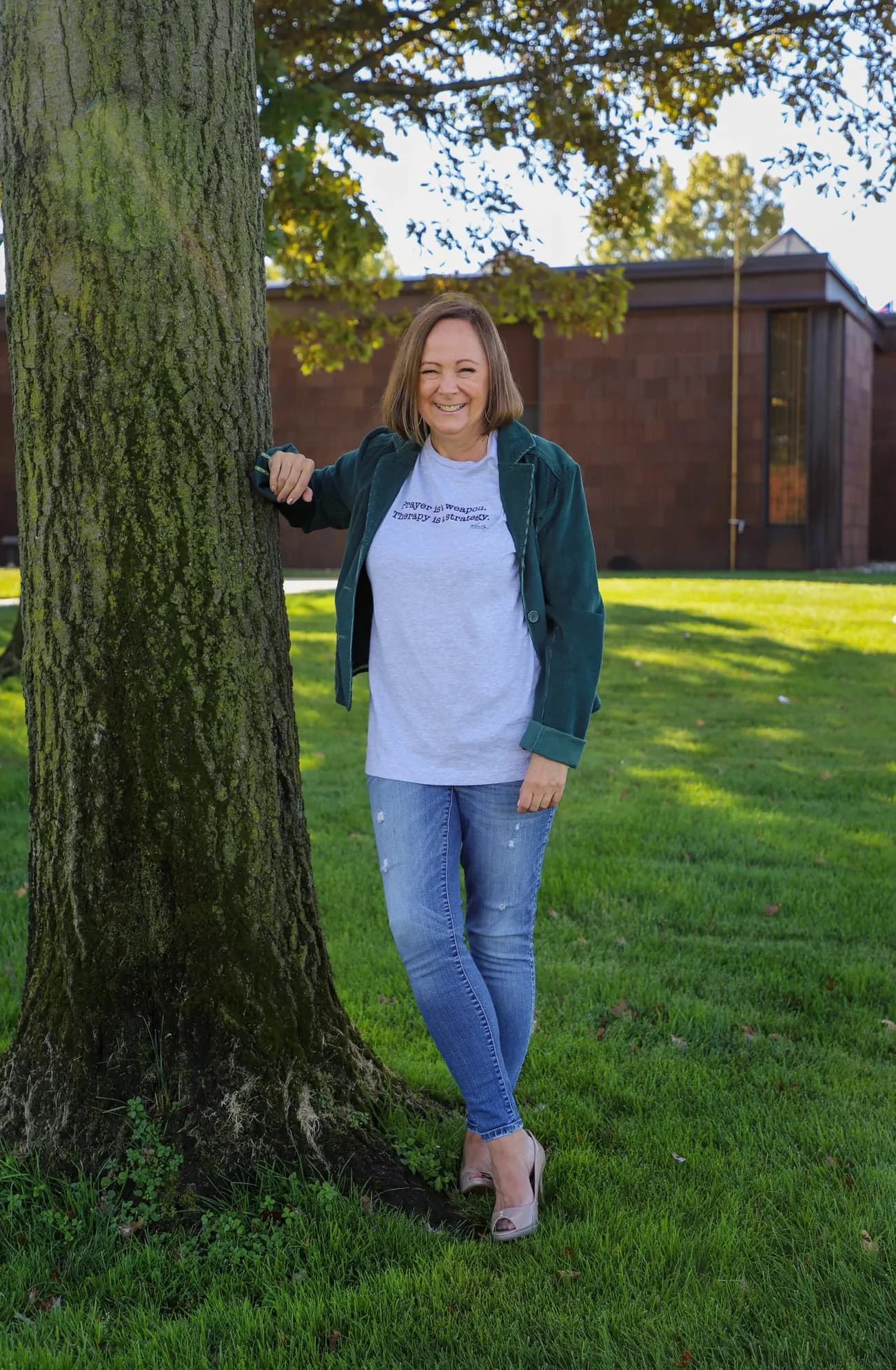
Therapist for Highly Sensitive People in Palm City, Florida
You notice the flicker of the fluorescent light, the tension in a friend’s voice, the way a room changes when someone walks in angry. You tear up at commercials and lie awake after a hard conversation. Maybe you’ve been called “too sensitive” for most of your life. If you’re looking for a therapist for highly sensitive people in Florida who sees that sensitivity as part of how you’re wired rather than something to fix, welcome. I offer HSP therapy in Palm City for women who feel deeply and are tired of feeling overwhelmed.
“Highly sensitive person” is a term coined by psychologist Elaine Aron to describe a temperament trait, not a diagnosis or disorder. HSPs tend to process information deeply, notice subtleties, feel emotions intensely and become overstimulated more quickly. Those qualities often come with real gifts: empathy, intuition, creativity and conscientiousness. They can also make anxiety, trauma and burnout land harder. Therapy can help you protect your nervous system, heal what hurts and build a life that fits the way you’re made.
“Your sensitivity isn’t a flaw to fix. It’s a way of being that deserves care.”
April Forella
Sound like you?
This may be you if…
You don’t need to be in a crisis to reach out. If a few of these feel familiar, it’s worth a conversation.
Crowds, noise, bright lights or a packed schedule leave you drained for hours afterward.
You absorb other people’s moods and sometimes can’t tell which feelings are yours.
You need more downtime than your friends seem to, and you feel guilty for needing it.
Criticism or conflict stays with you long after the other person has moved on.
You notice details others miss, then worry that you’re overreacting.
Beautiful music, art or a sunrise over the water can move you to tears.
You’ve been told you’re “too much” or “too sensitive” so often that you started to believe it.
Painful experiences from years ago still feel vivid and close.
You startle easily and need real time to settle after a stressful day.
How April works
How I Work With Highly Sensitive Women
With HSPs, pacing matters. We build plenty of calm and resourcing into our work, respect your limits on stimulation, and use EMDR carefully, so processing stays within a range your nervous system can handle.
01
A gentle, unhurried pace
Sessions move at a pace that respects how deeply you process. We can take breaks, slow down and check in often. You can pause EMDR at any time, and you never have to share more than feels right.
02
Widening your window of tolerance
HSPs can tip into overwhelm quickly. We use grounding, breathwork and Polyvagal-informed skills to help you catch early signs of overstimulation and return to a calmer state, gradually widening the range of experiences you can handle.
03
EMDR for old hurts and harsh beliefs
Many sensitive women carry beliefs like “Something is wrong with me,” “I’m too much” or “My feelings are a burden.” EMDR can target the memories where those beliefs formed, helping them carry less emotional weight today.
04
Boundaries that protect your energy
Using CBT and attachment-informed work, we identify what drains you and what replenishes you, then practice asking for what you need, like quiet time after work, without apology.
What It Means to Be a Highly Sensitive Person
Elaine Aron’s work describes high sensitivity as an innate trait in which the nervous system processes information more thoroughly. It isn’t the same as anxiety, shyness or introversion, though it can overlap with them, and plenty of HSPs are outgoing. What they share is depth. They think things through, feel things strongly and pick up on subtleties in their surroundings and in other people. That depth often makes them thoughtful partners, caring parents and attuned professionals.
The flip side is overstimulation. When there is too much input, too much noise, too many demands or too much emotional intensity, an HSP’s system can flood faster. In a culture that prizes pushing through, many sensitive women learn to override their own signals. They push past their limits to keep up, then feel ashamed when they need recovery time. Therapy offers a different starting point: your sensitivity is real information, and it’s worth listening to.
Anxiety and Trauma in Highly Sensitive People
Because HSPs feel and process so deeply, painful experiences can leave a stronger imprint. A critical parent, a frightening event or years of being told to toughen up may affect a sensitive child differently than a less sensitive sibling. As adults, many HSPs live with anxiety, emotional overwhelm or reactions that feel bigger than the situation in front of them. That isn’t weakness. It’s often a nervous system that never had the chance to fully settle.
EMDR can be a good fit for HSPs because you don’t have to talk through every detail to process a memory. We build resources first, then target specific memories and the beliefs attached to them, using eye movements or alternating taps while you stay present and in control. Many sensitive women appreciate that the process is structured and predictable. You can read about all eight phases on my EMDR therapy page, or explore trauma therapy in Palm City.
Everyday Healing Practices for HSPs
Therapy works best alongside small, daily care for your nervous system. In my post on five healing practices for highly sensitive people, I share a few that many HSPs find helpful. None of them are about becoming less sensitive. They’re about giving your sensitivity what it needs, so you can enjoy the gifts that come with it. We’ll adapt them to your home, your work and the people in your life, because what soothes one HSP can overstimulate another.
Living on the Treasure Coast can help, too. A slow walk on the beach, time near the St. Lucie River or a quiet morning on the porch can be genuine regulation, not indulgence. Many HSPs carry quiet guilt about needing more rest than the people around them. Part of our work may be giving yourself permission to build those moments into your week, the way you’d schedule anything else that matters, without needing to justify them to anyone.
Mindful breathing: slow, deep breaths that engage your body’s relaxation response and anchor you in the present.
A calming environment: soft textures, natural light and gentle sound to reduce sensory overload at home.
Journaling: a place to release intense emotions and get clearer about your triggers and needs.
Kind, clear boundaries: “I” statements such as “I need some quiet time after work to recharge,” starting with small requests.
Gentle movement: walking, stretching, yoga or tai chi to release tension your body has been holding.
Weekly HSP Therapy or an EMDR Intensive
For many highly sensitive women, weekly therapy is the gentlest place to start. A predictable rhythm gives your system time to integrate what comes up and to practice new skills between sessions. Fees are $200 per 60-minute session, and because my practice is private pay, the format can follow your needs rather than a plan’s limits. We can always slow down or space sessions differently if processing feels like a lot. For HSPs, integration matters as much as the work in the room.
Some HSPs prefer an EMDR Intensive, especially those who find it draining to open up and close down emotionally every week. Longer, focused sessions in my Palm City office let you settle in, go deep and then rest afterward. The intensive includes a 90-minute assessment, one to three days of three-hour sessions and a follow-up one to two weeks later. We’ll plan breaks and aftercare thoughtfully, and talk honestly about whether the format suits your nervous system.
Imagine…
Imagine leaving a crowded event tired but not undone, knowing how to settle yourself on the drive home.
Imagine feeling a friend’s sadness with compassion, without carrying it home as if it were your own.
Imagine asking for quiet time without apologizing three times first.
Imagine seeing your empathy and intuition as strengths you get to use on your own terms.
Imagine old memories feeling more distant, so today’s small stresses stop setting off yesterday’s alarms.
Imagine a week shaped around what your nervous system actually needs.
In person in Palm City
Therapy for Highly Sensitive People near Stuart, Port St. Lucie & Jupiter
I see clients at 901 SW Martin Downs Blvd. in Palm City, and I aim to keep every session calm and unhurried, something many sensitive women appreciate after a busy road. The office is a few minutes off I-95 Exit 110 and Turnpike Exit 133, an easy drive from Stuart, Jensen Beach and Port St. Lucie, and women also come up from Hobe Sound, Tequesta and Jupiter. If driving tends to overstimulate you, build in a few extra minutes to land before your session. Most work happens in person, and telehealth within Florida can be an option when clinically appropriate.
Therapy for Highly Sensitive People: what women ask
Answers from April Forella, LMHC, EMDR Certified Therapist
Is being a highly sensitive person a diagnosis?
No. High sensitivity is a temperament trait described by psychologist Elaine Aron, not a mental health diagnosis or disorder. Being an HSP doesn’t mean something is wrong with you. Some HSPs also experience anxiety, depression or trauma symptoms, and those can be treated. In therapy, we work with both: honoring your sensitive temperament while addressing whatever is causing you distress right now.
How do I know if I’m a highly sensitive person?
Many HSPs recognize themselves in descriptions like these: easily overwhelmed by noise or busy environments, deeply moved by art or nature, very aware of others’ moods, and needing time alone to recharge. Elaine Aron’s work includes a self-test that many people find clarifying. You don’t need to be certain before reaching out. We can talk about what you notice in yourself and whether the HSP framework is useful for you.
Is EMDR too intense for highly sensitive people?
Not necessarily. EMDR is structured to build safety and resources before any processing begins, and you remain in control throughout. You can pause at any time, and we work within your window of tolerance. With HSPs I pay close attention to pacing, check in often and make sure you leave each session grounded. Some women notice emotional shifts or vivid dreams between sessions, and we plan aftercare for that.
Can HSP therapy help with anxiety and overwhelm?
Yes, that’s often the focus. Therapy can help you recognize early signs of overstimulation, build regulation skills like mindful breathing and grounding, set boundaries that protect your energy, and use EMDR to process experiences that still fuel anxiety. The goal isn’t to make you less sensitive. It’s to help you feel steadier, so your sensitivity feels more like a strength than a burden.
How much does therapy cost?
Sessions are $200 for 60 minutes or $400 for a 2-hour session, and you’ll receive a Good Faith Estimate before we begin. If you have out-of-network benefits, I can provide a superbill you can submit for possible partial reimbursement. EMDR Intensives are $1,350 for one day (3 hours), $2,025 for two days and $2,700 for three days, and they’re private pay. We can go over your options during a free consultation.
Do you offer online therapy for highly sensitive people?
My practice is based in person in Palm City, and EMDR Intensives are always in person. Telehealth for clients located in Florida may be possible when clinically appropriate. Some sensitive clients prefer it because it removes the drive, while others find it easier to settle into a quiet room away from home. We can talk about what makes sense for you during your free phone consultation.
Schedule a complimentary phone consultation. Share what you’re carrying, ask your questions, and find out whether weekly therapy, extended sessions or an EMDR Intensive fits what you need right now.